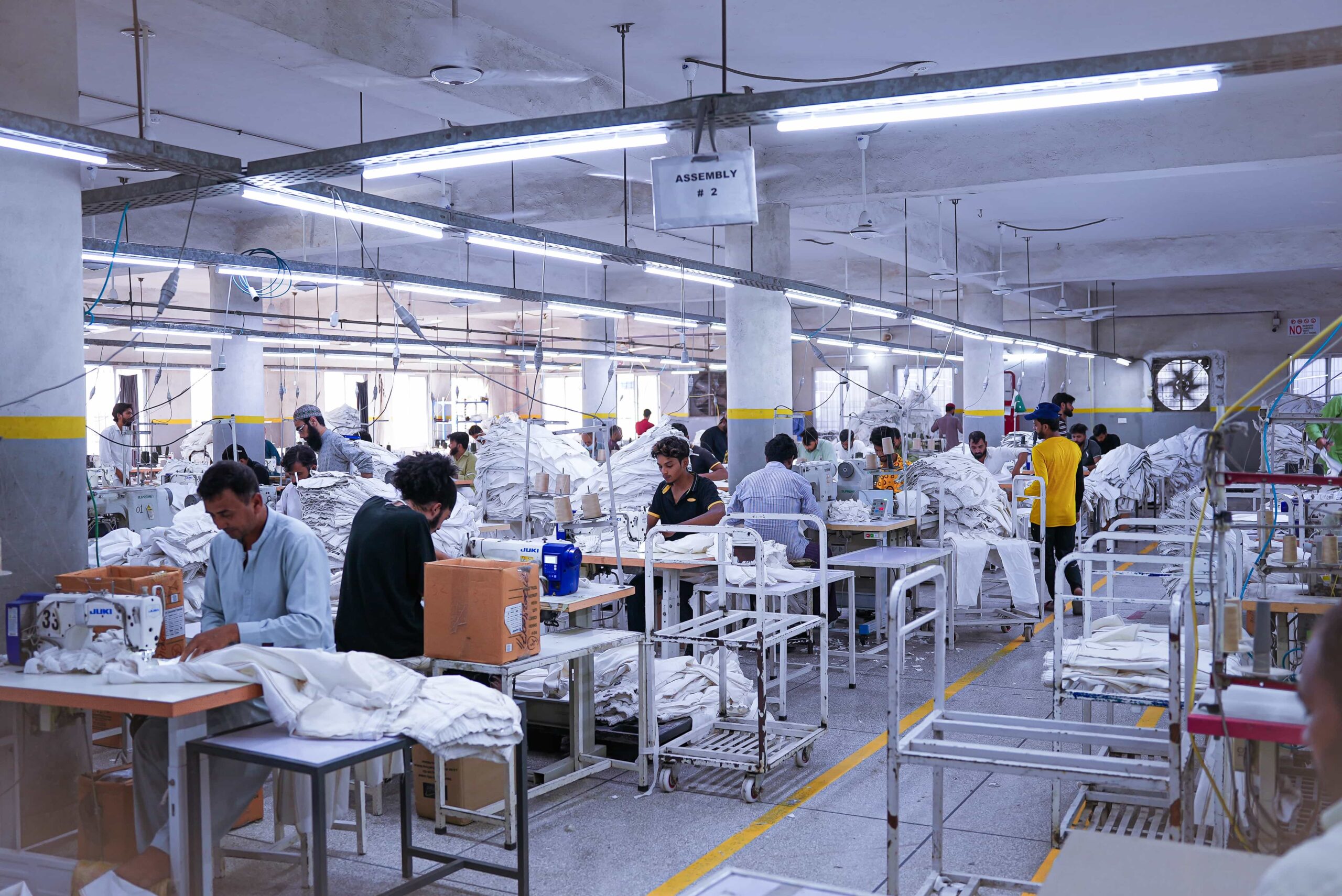
Stitching Buttoning and Riveting Process

The stitching process is an important stage in garment manufacturing since it includes sewing the fabric pieces together to form the finished product.
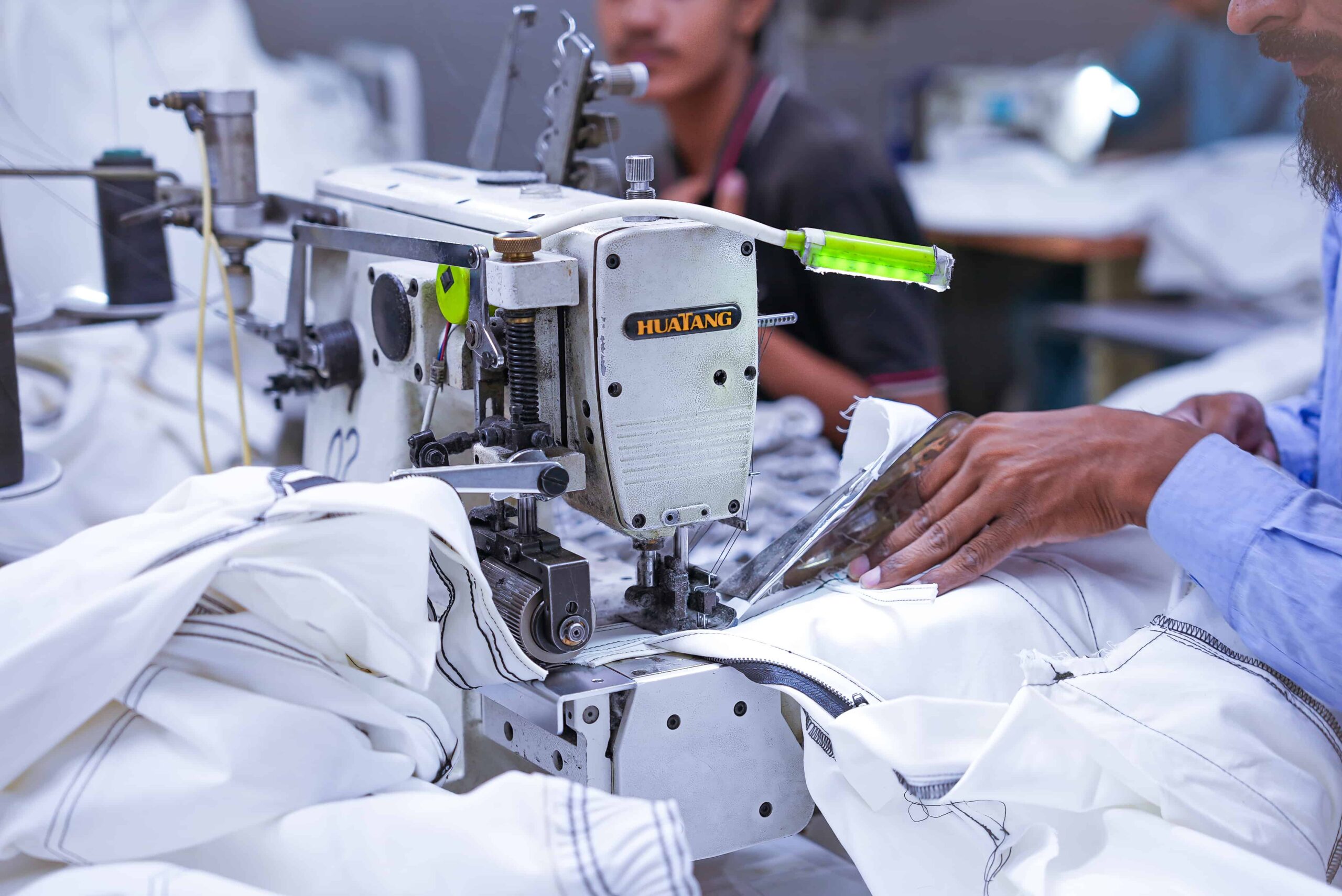
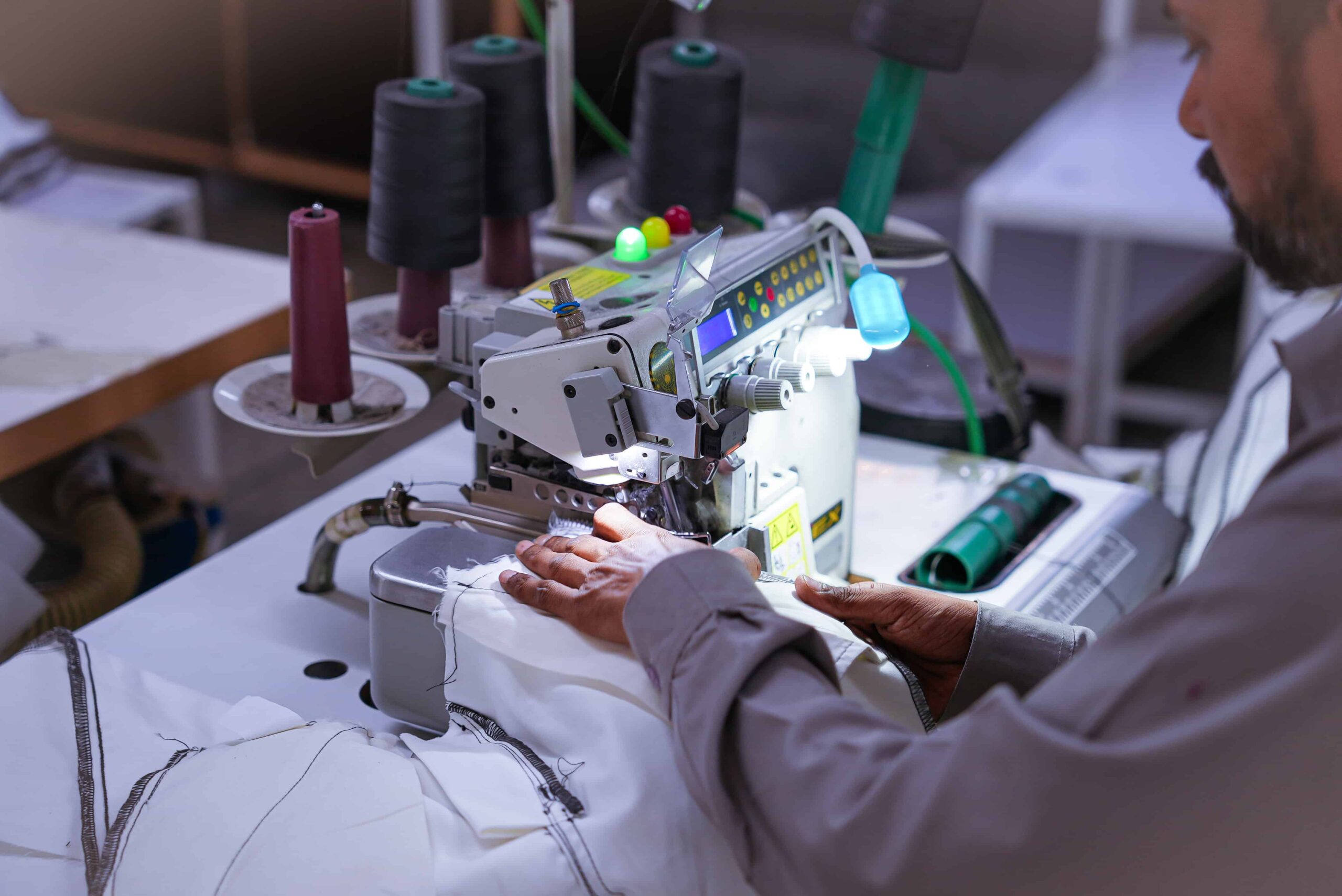
  • Sewing Machine Setup: Before you start stitching, you need to set up your sewing machines and accessories. This usually entails picking the appropriate thread, needle, and stitch type for the fabric and design of the jeans being made.
  • Assembly: Once the sewing machines are set up, the following step is to begin assembling the jeans. This entails stitching together the numerous fabric parts based on the pattern and style of the jeans. The components are usually pinned or clipped together to keep them in place while stitching.

Trimming and Pressing

  • Trimming in jeans manufacturing involves attaching decorative and functional elements to the garment.
  • Trimmings can include labels, patches, zippers, rivets, buttons, decorative stitching, and other embellishments.
  • They are selected based on style, branding, and functionality.
  • Trimming placement is marked, and labels and patches are sewn or heat-sealed onto specific areas.
  • In jeans manufacturing, pressing is the process of shaping, smoothing, and finishing the garment with heat and pressure.
  • Jeans are frequently wrinkled after stitching and require flattening of the seams.
  • They are placed on specialized pressing machines, such as a garment press or a steam iron.
  • Steam and heat are used, along with pressure, to flatten seams, remove wrinkles, and create crisp creases.